October 21st, 2020

CEREC is an acronym for Chairside Economical Restoration of Esthetic Ceramics. It is a type of dental technology that incorporates two computer technologies: CAD (computer-aided design), and CAM (computer-aided manufacturing). CEREC technology allows Dr. Mark Goedecke to design, make, and perfect a crown while you wait in the office. The process is generally completed in less than an hour.
The process begins when we take a picture of the tooth that will receive the crown. Using that picture, a digital impression of the real tooth is created. The proprietary software allows us to create the adjacent teeth digitally, which aids in the process of recreating the computer image that is sent to the milling machine via wireless transmission.
If we recommend a CEREC crown, you will get a permanent crown during a single office visit. We will be able to take a picture of your tooth and mouth, and then create the crown for your tooth. The design process allows us to match your crown to your real tooth as closely as possible.
CEREC crowns are made out of either ceramic material or a type of synthetic resin. Blocks of the material Dr. Mark Goedecke will choose go into the milling machine, where diamond blades file and shape the block of solid material into a crown that will look as much like your real tooth as possible.
Before permanently securing the crown in your mouth with resin cement, we will smooth, file, and refine the shape of the crown, putting it in your mouth to check your bite, and removing it to make small adjustments. After cementing the tooth in your mouth, Dr. Mark Goedecke will check to make sure the surface of the crown is smooth enough to make proper contact with your teeth when you bite down.
For more information about CEREC, or to schedule an appointment with Dr. Mark Goedecke, please give us a call at our convenient Mt. Pleasant office!
October 14th, 2020
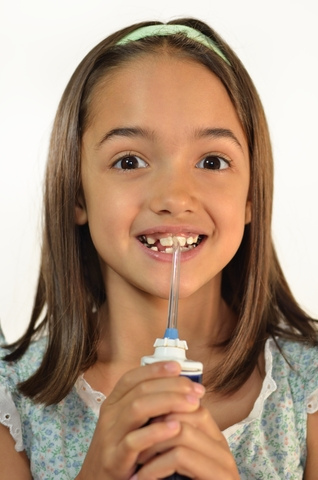
Water picks, sometimes called “oral irrigators,” make an excellent addition to your regular home care regimen of brushing and flossing. Especially helpful to those who suffer from periodontal disease and those patients of ours undergoing orthodontic treatment with full-bracketed braces, water picks use powerful tiny bursts of water to dislodge food scraps, bacteria, and other debris nestled in the crevices of your mouth. Children undergoing orthodontic treatment may find using a water pick is beneficial if their toothbrush bristles tend to get caught on their wires or brackets.
When you use a water pick, you’re not only dislodging any particles or debris and bacteria you might have missed when brushing, you are also gently massaging the gums, which helps promote blood flow in the gums and keeps them healthy. While water picks are an excellent addition to your daily fight against gingivitis and other periodontal diseases, they are incapable of fully removing plaque, which is why Dr. Mark Goedecke and our team at Goedecke Family Dentistry want to remind you to keep brushing and flossing every day.
If you have sensitive teeth or gums and find it uncomfortable to floss daily, water picks are a good alternative to reduce discomfort while effectively cleaning between teeth. Diabetics sometimes prefer water picks to flossing because they don't cause bleeding of the gums, which can be a problem with floss. If you have a permanent bridge, crowns, or other dental restoration, you may find that a water pick helps you keep the area around the restorations clean.
So how do you choose the right water pick?
Water picks are available for home or portable use. The home versions tend to be larger and use standard electrical outlets, while portable models use batteries. Aside from the size difference, they work in the same manner, both using pulsating water streams. A more crucial difference between water picks is the ability to adjust the pressure. Most home models will let you choose from several pressure settings, depending on how sensitive your teeth and gums are. Most portable models have only one pressure setting. If you want to use mouthwash or a dental rinse in your water pick, check the label first; some models suggest using water only.
Please give us a call at our Mt. Pleasant office if you have any questions about water picks, or ask Dr. Mark Goedecke during your next visit!
October 7th, 2020

Adults are no strangers to feeling like there is never enough time in the day to get everything done. Your alarm clock rings and within minutes you ping pong around trying to spread peanut butter on sandwiches, answer your cell phone, remove the dog hair from your clothes, and make sure your child has completed his or her science fair project. Brushing your teeth can easily fall to the wayside. That is why our office promotes a simple, daily oral health regimen that you can easily incorporate into your busy lifestyle.
The American Dental Hygienists' Association (ADHA), in partnership with the Wrigley Jr. Company, is celebrating National Dental Hygiene Month (NDHM) during October. The ADHA encourages people to "Brush. Floss. Rinse. Chew...Keep it Clean, Keep it Healthy!" and offers some great tips for a quick and effective home oral health routine, below:
Oral Health Routine at Home
- Brushing your teeth twice daily is the most important thing you can do to diminish the accumulation of plaque and the potential for other oral problems such as cavities and gingivitis.
- Flossing once daily removes plaque and food from beneath the gums and between teeth that brushing alone cannot remove. Tooth decay and gum disease often begin in these areas.
- Rinsing your mouth with an antibacterial, non-alcohol based mouthwash kills plaque and gingivitis germs that brushing and flossing do not catch. We recommend using a mouthwash with the ADA Seal of Acceptance.
- Chewing sugar-free gum helps produce saliva, which battles cavities. The gum also neutralizes plaque, strengthens enamel, and removes remaining food. It is especially important to chew gum after eating or drinking.
It's easy to put the toothbrush down in order to take care of matters you feel are more urgent, but remember, a good oral health routine at home is the best way to prevent periodontal disease. "Periodontal disease is the most common cause of tooth loss in adults. An estimated 75 percent of Americans reportedly have some form of periodontal disease," said the ADHA. Periodontal disease also is linked to more serious illnesses such as diabetes and stroke.
Also, remember to keep regular visits with our office. Dr. Mark Goedecke can help you learn more about proper care for your teeth and gums.
September 30th, 2020

Losing a tooth can affect a lot more than just the look of your smile. Missing teeth affect your ability to chew and can also cause problems for your other teeth. It is essential to replace missing teeth in order to maintain oral health as well as your overall well-being. Dental implants are an excellent option to replace your natural tooth and its root without affecting your neighboring teeth, and are available from Dr. Mark Goedecke.
Why choose dental implants?
There are many reasons to choose dental implants to replace your lost or damaged teeth. According to the American Academy of Implant Dentistry, dental implants are often considered more predictable than other treatment options and are known to provide long-term successful outcomes.
Dental implants provide many benefits over other treatments such as bridgework and dentures:
- Unlike other treatment options for missing teeth, dental implants allow Dr. Mark Goedecke to replace your tooth without impacting the healthy teeth surrounding the space.
- Dental implants also protect healthy bone by preventing potential bone loss and deterioration in the jaw.
- This treatment option allows you to speak and eat normally without worrying about slippery or uncomfortable removable dentures.
- The closest thing to natural teeth, dental implants allow you to maintain your smile and natural face shape.
- These implants are built to last, providing you with a long-term solution to missing teeth.
Overall, dental implants are the next best thing to natural, healthy teeth. Choosing to undergo surgery to replace your lost or damaged teeth is an important decision. To avoid the issues caused by lost teeth, consult Dr. Mark Goedecke or visit our Mt. Pleasant office to see if you are a candidate for dental implants.