illumitrac

Our Blog

What to Look for when Choosing a Mouthwash

July 22nd, 2020

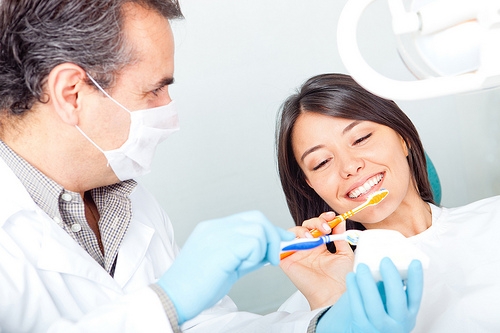
Mouthwash is important for more than just keeping your breath fresh and smelling great. Combined with other forms of dental hygiene, it can help prevent plaque, cavities, gingivitis, and other gum diseases. But it may be difficult for you to choose the right mouthwash off the shelf. Dr. Mark Goedecke and our team at Goedecke Family Dentistry wanted to share a few things to look for when choosing a mouthwash.

Fluoride mouthwashes

Fluoride has been the subject of many debates in the oral health community. If you live in the United States, the tap water already contains small amounts of fluoride to promote dental health. You may not need to use a fluoride mouthwash if this is the case. However, if you are cavity-prone, fluoride creates a protective film over the teeth that protects against these buildups. It also helps strengthen the enamel over the teeth, maintain good dental hygiene, and keep your teeth strong for the rest of your life.

Alcohol mouthwashes

Alcohol in mouthwash works as an antiseptic: it clears the mouth of germs and some viral infections. However, if you have issues relating to dry mouth, alcohol can exacerbate the problem. If this is the case, consider using an alcohol-free mouthwash. This will free your mouth from the drying effects of the alcohol base. Also, if you have children, you will want to get an alcohol-free children’s mouthwash, because kids are prone to swallowing the substance, and this can lead to toxic side effects. Even if you are an adult using the mouthwash, if it contains alcohol, you should avoid swallowing it.

Antibacterial mouthwashes

Antibacterial mouthwashes have chemicals to help fight gum disease and other infections. Most mouthwash products contain at least trace amounts of these antibacterials; however, some mouthwashes are made specifically to fight bacterial infections. Remember that mouthwash is prevention, not a cure, so if you are presently suffering from a bacterial infection, you should visit our Mt. Pleasant office right away. Dr. Mark Goedecke may be able to recommend a more powerful antibacterial mouthwash that can help you reduce your pain and other symptoms.

Is Your Broken Tooth An Emergency?

July 15th, 2020

When you chip a tooth badly, it can be a very nerve-wracking situation. Dr. Mark Goedecke and our team want to provide you with some information that can help if you ever suffer a chipped or broken tooth. The most common ways people break their teeth are by biting down on something hard, getting hit in the mouth, falling down, or developing cavities that weaken the tooth and allow it to be broken easily. There are a few things you can do if you find yourself in this situation, however.

First, we recommend that you investigate whether the tooth is partially chipped or completely broken. Unless you are experiencing a lot of pain or bleeding, this should not be treated as an emergency. You may call our office and we will try to schedule an appointment with you as soon as possible. Once we have evaluated the tooth during your appointment, we can start to treat it. For minor chips or cracks, we may simply smooth out the area or fill in the space so the crack doesn’t spread.

If your teeth show severe damage such as a serious break, split tooth, split root, or a decay-induced break, Dr. Mark Goedecke may need to take more time to fix the problem. If you need emergency dental care because a tooth has fallen out, call our practice immediately to schedule an appointment for that day. If you’re waiting for an emergency appointment, you can rinse your mouth with warm salt water and apply slight pressure to the area to stop the bleeding. We recommend using an ice pack to reduce swelling, but do not take any aspirin because that may increase the bleeding.

If your tooth has completely fallen out of the socket, hold it by the crown and rinse it under running water. Do not let the tooth become dry; instead, place it in salt water or milk until you get to our office. Dr. Mark Goedecke will determine whether the broken tooth can be salvaged or will need to be completely replaced.

We know how upsetting it can be to chip or break a tooth, which is why we want to guide you through this process. Most chipped teeth are usually just cosmetic problems, fortunately, but we know that dental emergencies can come up rather suddenly. Be sure to schedule an appointment at our Mt. Pleasant office as soon as an emergency situation occurs.

What are mini implants used for?

July 8th, 2020

The use of mini dental implants (MDIs) is on the rise. MDIs are about the diameter of a toothpick (1.8 to 2.9 millimeters with lengths between ten to 18 millimeters) and are primarily used to secure loose upper or lower dentures or partial dentures.

MDIs are particularly useful for patients who suffer from osteoporosis or otherwise aren't well enough to get the bone grafts sometimes required by traditional dental implants. Their diminutive size also allows them to replace smaller teeth where the placement of a dental implant isn't feasible or called for.

Some of the benefits of MDIs include:

  • The procedure is quicker and less invasive – Since MDIs don’t require the cutting of gum tissue or sutures, Dr. Mark Goedecke can place the implant quickly, resulting in a shorter healing process. MDIs go directly through the gum tissue and into the jawbone.
  • Lower cost – MDIs run in the range of $500 to $1500, whereas traditional dental implants can cost around $4,000.
  • Less risk of surgical error – Since MDIs don't go as deep into the tissue or jawbone, there is less risk of surgical error, like hitting a nerve or sinus cavity.
  • Can be used in thinner areas of the jawbone – Since MDIs don't require as much gum tissue or jawbone, they can be used in thinner areas of the jawbone, where a traditional dental implant would require a bone graft.

Although there are many advantages to MDIs, they aren't for everyone or every situation. There are some drawbacks, especially when it comes to their durability and stability. MDIs also haven't been studied nearly as much as dental implants.

Whatever your situation, it's best to speak with Dr. Mark Goedecke about your options, and whether an MDI or a dental implant would work best for your specific case. Schedule an appointment at our Mt. Pleasant office to learn more.

Happy Fourth of July

July 1st, 2020

Every year, Americans all over the world celebrate the birth of the country and its independence on the Fourth of July. There are countless ways that people celebrate and they range from community parades and large scale gatherings to concerts, fireworks displays, and smaller scale celebrations among family and friends. For some people, July 4th is synonymous with baseball, while for others it is all about the beach of barbecues. However you celebrate, you can be sure that red, white, and blue is visible everywhere throughout the area.

The Beginnings of Fourth of July Celebrations

Although it wasn't officially designated as a federal holiday until 1941, the actual tradition of celebrating Independence Day goes back to the time of the American Revolution (1775 – 1783). At the time of the American Revolution, representatives from the 13 colonies penned the resolution that ultimately declared their independence from Great Britain. The continental congress voted to adopt the Declaration of Independence on July 2nd of 1776. Two days later, Thomas Jefferson's famous document that is now known as the Declaration of Independence, was adopted by delegates representing the 13 colonies.

First States to Recognize the Fourth of July

In 1781, Massachusetts became the first state (or commonwealth) whose legislature resolved to designate July 4th as the date on which to celebrate the country's independence. Two years later, Boston became the first city to make an official designation to honor the country's birth with a holiday on July 4th. In that same year, North Carolina's governor, Alexander Martin, became the first governor to issue an official state order stipulating that July 4th was the day on which North Carolinians would celebrate the country's independence.

Fun Facts About the Fourth of July

  • The reason the stars on the original flag were arranged in a circle is because it was believed that would indicate that all of the colonies were equal.
  • Americans eat over 150 million hot dogs on July 4th.
  • Imports of fireworks each year totals over $211 million.
  • The first “official” Fourth of July party took place at the White House in 1801.
  • Benjamin Franklin didn't want the national bird to be the bald eagle. He believed that the turkey was better suited to the coveted distinction. John Adams and Thomas Jefferson disagreed with him, and he was outvoted, so the bald eagle became the official bird of the United States.

For many, the tradition is something entirely different. Along the coastal areas of the United States, people may haul out huge pots to have lobster or other types of seafood boils. Others may spend the day in the bleachers at a baseball game, or at a park, cooking a great traditional meal over an open fire. No matter how or where you celebrate, one thing is certain: all Americans celebrate July 4th as the birth and independence of our country.

Dr. Mark Goedecke and our team at Goedecke Family Dentistry wish you a safe and happy Fourth of July!